Skip to content

From First Steps to 3 Years Old
As your child learns to walk and explore, you’re watching a remarkable transformation. One of the most important but often invisible parts of this journey is Balance. Developing balance isn’t just about avoiding tumbles; it supports strength, coordination, confidence, agility, and lifelong physical health.
What Is Balance and Why Is It So Important?
- Balance is the foundation of movement. From standing still to walking, running, and climbing, all of these require your child to control where their body is in space.
- It develops in two forms:
- Static balance: holding a steady position, for example, standing.
- Dynamic balance: staying stable while moving, for example, walking, turning, starting and stopping.
- It grows quickly in early childhood. As toddlers gain walking experience, their balance systems, muscles, brain, and inner ear become more coordinated.
- Balance supports bone strength. Research shows that early walking and movement stress bones in healthy ways, helping them grow stronger over time.
- Balance shapes motor skills. Better balance helps children climb, run, kick, and jump, and it contributes to confidence and a willingness to try new physical challenges.
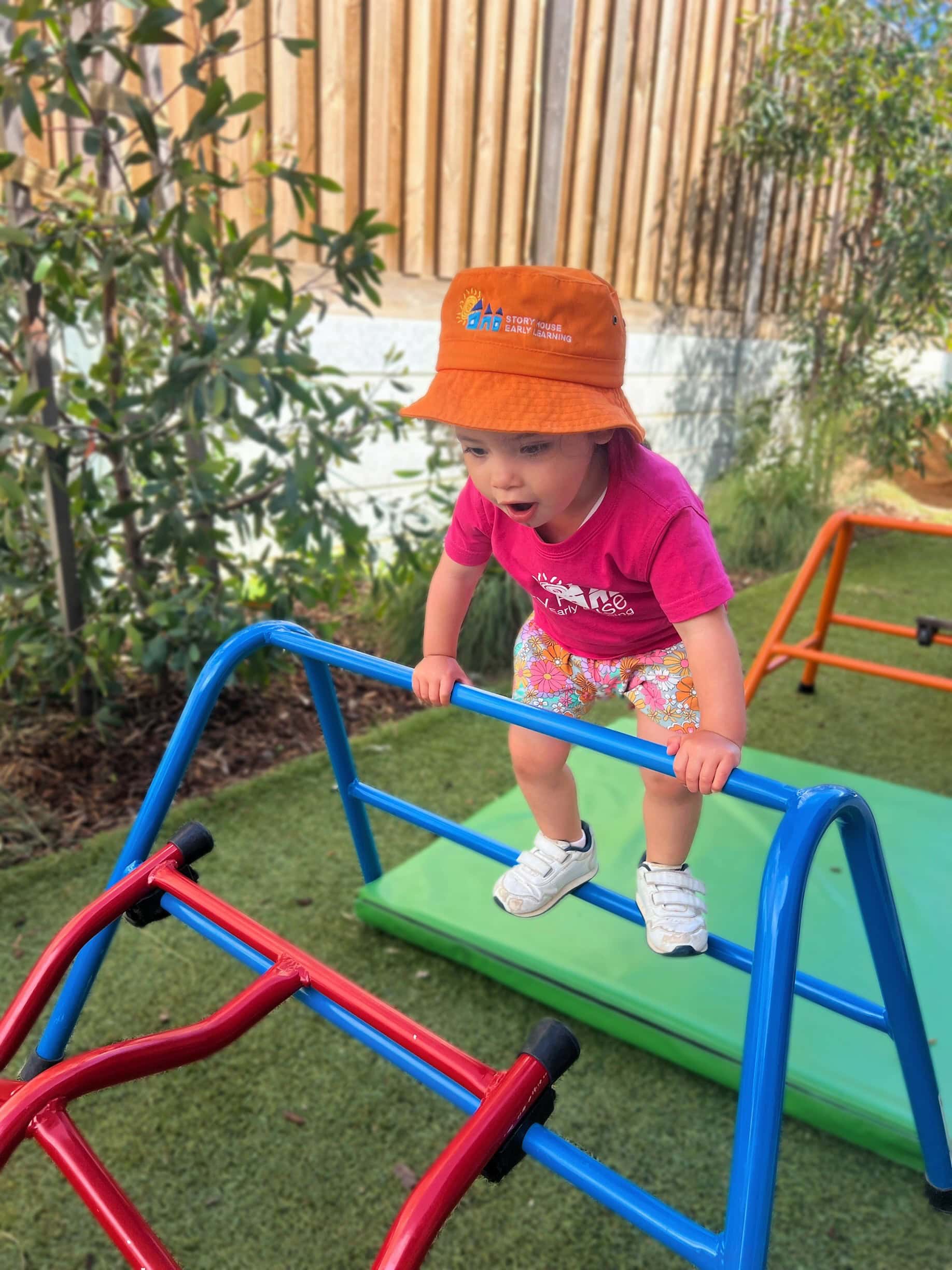
Movement isn’t just exercise; it’s learning. According to Dr Whitten, how we move shapes how we feel, how we grow, and how our bodies adapt. For toddlers, this means plenty of varied, free movement helps their bodies learn to balance naturally. Rather than forcing a rigid posture. For young children, this means encouraging play, exploration, and safe falls, not policing every step. Balance is a skill. Balance develops through challenges moving on varied surfaces such as grass, soft mats, gentle slopes, climbing rocks, and frames are excellent for building this, especially when children have freedom from shoes, barefoot play.
Click the link to listen to DR Yonatan Whitten about children’s foot development https://www.youtube.com/watch?v=La036jFN0XM
What Balance Looks Like From First Steps to Age 3
| Age Range | Balance Development Milestones | How You Can Help |
|---|---|---|
| First Steps 10–18 months | Wide-legged, cautious walking as their centre of gravity is still adjusting | Provide a clear, safe walking space. Let them practice walking freely and falling safely. |
| Around 18–24 months | More stable walking, starting to navigate uneven surfaces, and better coordination. | Encourage exploring different surfaces: grass, carpet, sand. Set up gentle obstacles, soft pillows, and low steps. |
| 2–3 years old | Emerging ability to balance on one foot briefly, climb, hop, and manoeuvre stairs with coordination. | Promote active play: climbing, running, jumping. Use play-based balance games, like balancing bean bags, walking on curbs, or playful obstacle courses. |
Tips for Supporting Healthy Balance at Home
Create a safe exploration zone. Clear away sharp-edged furniture and give your child space to move, fall, and try new things.
Use different textures and surfaces.
Let your child walk on grass, sand, foam mats, or rugs. Each surface invites the body to adjust and adapt.
Include play that challenges balance.
Try balancing toys on their head, carrying light objects while walking, or simple balance “games” like standing on one foot with support.
Practice open-ended movement.
Avoid over-structuring. Instead of telling them precisely how to walk, follow their lead, let them wander, turn, pause, crash softly, it all helps.
Model mindful movement. Narrate your child’s movement: “You bent your knee to pick that up. You leaned a little; that’s your balance working.” This helps build body awareness and language by connecting words and actions.
Be patient with practice comes with progress. Falling is a normal and necessary part of learning to balance.
Seek support if needed. If balance seems unusually delayed (for instance, by 18–24 months, your child is still tiptoeing heavily or never falls, talk with your paediatrician or a physiotherapist.
Why Balance Matters Long Term
By encouraging balance development now, you can
- Support your child’s physical health and strength.
- Build the motor skills that they will use for years, such as climbing, running, and sports.
- Help develop confidence and independence.
- Lay the foundation for good posture and healthy movement patterns later in life.
- Support core balance, which helps with academic learning at school.
That is why Story House, as part of our curriculum, encourages barefoot play. We know barefoot play is an essential part of learning how children learn to control their body through the senses in the feet, allowing your child to move freely to help develop their balance, coordination, strength and for good foot growth.
If you’d like extra ideas to encourage balance play or help set up safe balance challenges at home, let us know. We’d love to help!