Skip to content

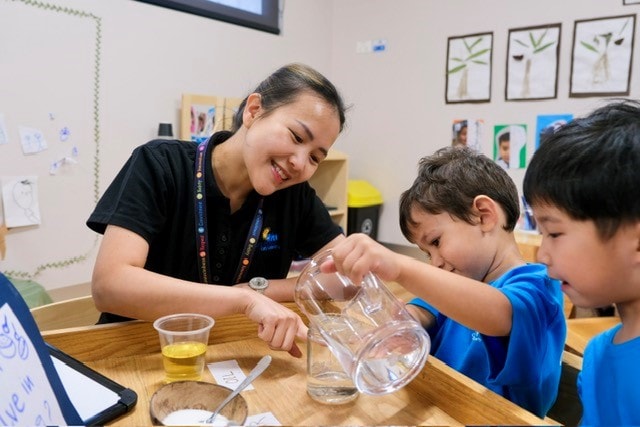
Starting school is a big milestone for children and families. While many parents worry about early academics, school readiness is much broader. Children thrive in their first school years when they have a strong foundation of social, emotional, physical, and thinking skills that prepare them to learn, connect, and navigate new routines.
School readiness is not about being able to read or write before day one. It’s about building a strong, well-rounded foundation that supports your child’s confidence, well-being, and enthusiasm for learning.
Children who enter school with the following five core skills are better prepared to embrace new experiences, build friendships, and enjoy their journey as learners.
1. Social & Emotional Skills: The Heart of School Readiness
Before learning letters and numbers, children need to understand themselves and others. Social/emotional skills help them build friendships, navigate classroom expectations, and manage big feelings.
Key abilities include:
- Taking turns and sharing.
- Separating from caregivers with confidence.
- Using words to express needs or feelings.
- Beginning to manage frustration or disappointment.
- Showing empathy and kindness toward peers.
Children who feel emotionally supported and socially connected adjust more smoothly to school routines, group interactions, and learning challenges. IN our STRONG Beginning program, you will see children participating in inquiry projects, such as learning to be kind, listening to others and learning how to express their feelings.
2. Language & Communication Skills
Language is the gateway to learning. Children don’t need to be fluent speakers or perfect communicators, but they do benefit from being able to:
- Understand simple instructions.
- Express needs, ideas, or questions.
- Engage in short conversations.
- Use vocabulary to describe everyday things.
- Listen during stories or group time.
STRONG early communication skills help children participate actively, build relationships, and feel confident expressing themselves. Communication skills and phonemic awareness, understanding the sound in words, are the foundation of literacy learning, reading and writing. Our Pathways to school program supports children learning by participating in reading, rhymes, drawing and emerging their writing skills using their own individual journaling book and participating in projects of inquiry.
3. Physical (Large and Fine Motor) Skills
School life is full of movements such as running, climbing, sitting on the mat, carrying a backpack, putting on hats, coast shoes, and hands-on tasks like drawing, glueing, and turning pages. Children starting school benefit from:
Large motor skills, such as:
- Balancing.
- Jumping and climbing.
- Running, stopping, and starting.
- Carrying a lunchbox or bag.
Fine motor skills, such as:
- Holding crayons or markers.
- Using scissors safely.
- Manipulating puzzles, blocks, and small toys.
- Starting to dress themselves (zips, buttons, shoes).
These skills help children participate fully and confidently in both play and learning activities. At Story House, you will see children participating in games with rules, moving their bodies and participating in mindfulness activities. Having their own Story House lunch box and bag is a step towards learning to look after their own belongings.
4. Early Independence & Self-Help Skills
School encourages children to take pride in “doing it myself.” The more independent a child is with basic tasks, the more confident and comfortable they feel in the classroom. Helpful independence skills include:
- Using the toilet and washing hands.
- Opening lunch containers or drink bottles through our lunch box learning program, tidying up personal items.
- Following simple routines.
- Asking for help when needed.
These are not only practical skills, but they also boost self-esteem and resilience in your child.
5. Curiosity & a Love of Learning
Perhaps the most important skill of all isn’t a skill; it’s a mindset. Children who are curious, interested, and eager to explore tend to flourish in school environments.
You’ll notice this through:
- Asking questions.
- Showing interest in stories, pictures, and new ideas.
- Trying new activities.
- Persisting with challenges.
- Engaging in imaginative play.
The above are all part of our Pathways to School Curriculum, preparing your child to be ready for school.