Skip to content

Key takeaways
- No single food can boost a child’s intelligence. Young brains thrive on diverse meals that supply sufficient energy and vital nutrients consistently.
- Iron, iodine, omega-3 fats, protein and other nutrients contribute to normal brain growth and nervous system development.
- Regular meals and snacks help children maintain the energy they need to play, interact and learn.
- Childcare menu quality depends on balance, variety, age appropriateness, dietary safety and positive mealtime practices.
- Food can aid concentration and emotional health, but it is just one factor alongside sleep, health, relationships and the learning environment.
The phrase ‘brain food’ turns up almost everywhere, and you likely often hear that berries, fish or seeds are especially good for young children. Early development doesn’t rest on a single ingredient. What we know about brain food for children in early learning contexts coincides with everyday healthy nutrition. It includes a varied diet that provides sufficient energy and essential nutrients to support growing children.
This article covers which nutrients contribute to normal development, how they appear in fresh and balanced childcare meals and what you should look for on a centre menu. ACECQA notes that children may consume up to two-thirds of their daily dietary intake at their early learning service, so menu quality is an important part of your enrolment decision.
What ‘Brain Food’ Really Means in Early Childhood
The brain develops very rapidly during your child’s early years. Nutrients work together across the day and week rather than just as isolated performance boosters. The useful everyday term ‘brain food’ describes meals that provide:
• Enough energy for growth and active play
• Essential nutrients for normal development
• Variety across the five food groups
• Regular opportunities to eat and drink
• Textures suited to the child’s age and abilities
There’s an important distinction between nutritional adequacy and enhancement. Correcting or preventing a nutrient shortfall supports normal development. Giving a child more of a nutrient than they need doesn’t necessarily improve cognition. Research on food for cognitive development in childhood has often examined specific supplements rather than balanced meals, and reviews of omega-3 supplementation beyond infancy report mixed results regarding cognition. The most robust evidence supports the idea that ordinary, diverse food eaten consistently over time is beneficial.
The best childcare menu isn’t about trendy ingredients, but about providing children with consistent variety and calm, well-timed meals throughout the week.
The Nutrients Growing Brains Need and Where They Come From
Nutrition for toddlers’ brain development and healthy growth involves several nutrients working along with adequate exercise and hydration. The table below covers a balanced selection.
| Nutrient or food component | Why it’s important | Childcare-friendly food sources | Please note |
| Iron | Supports oxygen transport and normal neurological development | Lean meat, legumes, eggs and iron-fortified cereals | One iron-rich meal doesn’t instantly improve attention |
| Iodine | Supports thyroid hormone production and normal brain and nervous system development | Milk, yoghurt, eggs, fish and bread made with iodised salt | Don’t add supplements unless it’s under medical advice |
| Omega-3 fats | Form part of brain cell membranes and contribute to normal neurological function | Fish and suitable unsaturated-fat food sources | Evidence about supplements and cognition is mixed |
| Protein and zinc | Support growth, tissue development and many cellular processes | Meat, poultry, eggs, dairy, tofu and legumes | Raising protein intake unnecessarily does not equate to increased intelligence. |
| Wholegrain carbohydrates | Provide energy for active play and participation, along with fibre and other nutrients | Wholegrain bread, oats, brown rice and wholegrain pasta | Carbohydrates aren’t inherently good or bad |
This list isn’t exhaustive. A complete menu includes vegetables, fruit, dairy or alternatives, adequate fluid intake, and sufficient energy for the child’s age. Australian Dietary Guidelines advise creating diets from diverse foods in the five food groups instead of focusing on individual nutrients or products.
Older children in the preschool room have different needs from young toddlers, so the best foods for child development depend on age, appetite and any medical or cultural dietary considerations.
The NHMRC Nutrient Reference Values provide age-based guidance for essential nutrients, including iron, iodine, choline and a range of vitamins and minerals. If you’re concerned about specific quantities, you should speak with your GP, paediatrician or accredited practising dietitian rather than adjusting intake based on general information.
For everyday context, our overview of healthy eating for children examines how variety builds up over the week. Our healthy snack ideas for children offer practical examples of foods for in-between meals.
How Childcare Meals Support Energy, Attention and Emotional Wellbeing
Meals influence learning conditions, rather than a child’s intelligence or behaviour. Regular meals and snacks prevent hunger during long days while providing energy and hydration to support play and communication.
These four areas demonstrate how this appears inside a childcare room:
- Energy for participation: Young children need enough food to support growth and active movement. A varied meal containing carbohydrates, protein and other food groups can provide energy throughout the session.
- Attention and engagement: Children may find it harder to participate when they’re hungry, thirsty or physically uncomfortable. Attributing improved concentration to a single ingredient isn’t supported by the evidence.
- Emotional wellbeing: Hunger and fatigue can exacerbate a child’s difficulty managing their frustration. Nutritious food can support wellbeing, but it shouldn’t be presented as a treatment for emotional or behavioural concerns.
- Predictability and security: Regular, relaxed mealtimes give children a familiar daily rhythm. Sitting with educators and peers can also deepen a sense of belonging and improve social development.
ACECQA links adequate nutrition with children’s ability to focus, engage and regulate their emotions. Calm and positive mealtime environments are also highly regarded.
Food is one part of the picture. Persistent changes in attention, behaviour, appetite or development shouldn’t be attributed to diet without appropriate professional assessment from a GP, paediatrician or accredited practising dietitian.
How SHEL Plans Fresh Daily Meals for Growing Children
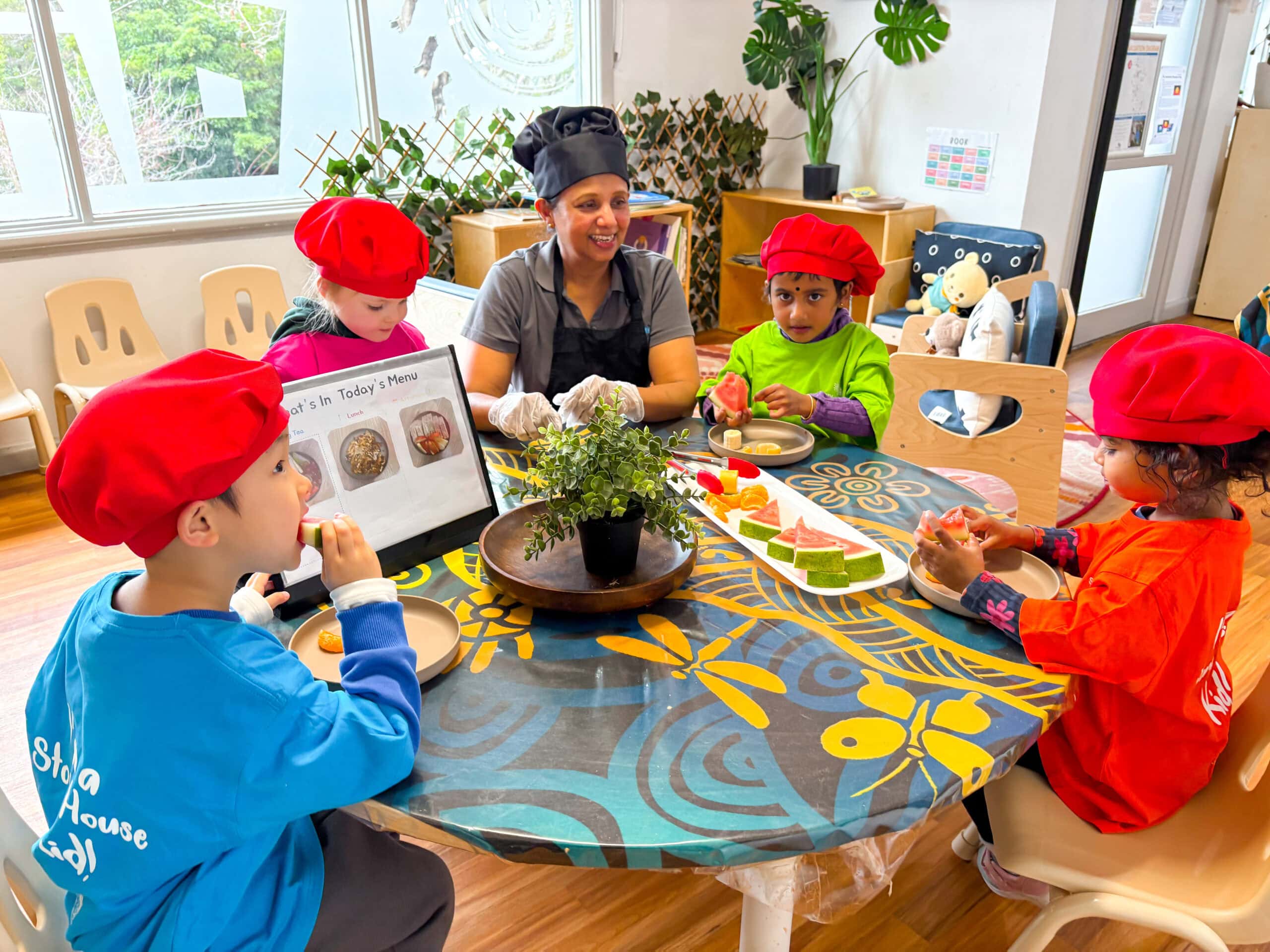
Nutrition science needs to translate into practical menu planning. Otherwise, general discussions about childcare meals for brain health can remain abstract. Story House’s public information describes fresh, balanced meals prepared each day, with adaptations for allergies, intolerances and community cultural backgrounds.
The published Nutrition and Food Safety Policy sets out how services should approach menu development, including:
• Meals and snacks drawn from the five food groups
• Variety across days and seasons
• Age-appropriate textures and portions
• Allergy, intolerance and medical-diet management
• Cultural and religious dietary inclusion
• Water availability and safe food handling
• Menu visibility and communication with families
• Calm mealtimes that respect children’s appetite cues
The policy outlines menus based on Australian nutrition guidance, varied to introduce different foods, and reviewed at regular intervals, generally before each season. It also outlines consultation with children, educators and families.
An ordinary meal on a childcare menu can carry several complementary elements at once. A ‘from menu to plate’ example may include a lentil and vegetable pasta dish, which can provide protein, iron, carbohydrate and vegetables in a single serve. Fruit and yoghurt at another point in the day add further variety. The value comes from the complete daily and weekly pattern.
Children who explore the Stephanie Alexander Kitchen Garden Program at participating centres experience learning about food through gardening and cooking, which supports curiosity, familiarisation and confidence with new ingredients.
What Parents Should Look for on a Childcare Menu
Science becomes more useful as a practical evaluation tool. The five questions you may like to raise on a childcare centre tour include:
How is the menu checked against Australian nutrition guidance?
Look for a menu-planning framework, review process or qualified source rather than describing the food as simply healthy.
How much variety appears across the week?
Look for changing vegetables, fruits, grains and protein sources, not just the same few meals appearing repeatedly.
How are allergies and dietary requirements managed?
Find out how dietary needs are documented and communicated to the cook, and the process for checking before food reaches your child.
How are meals adapted for different ages and feeding abilities?
Babies, toddlers and preschoolers require different textures, portions, utensils and levels of supervision.
What happens when a child doesn’t want to eat?
Look for a calm, pressure-free approach that respects appetite cues and doesn’t use food as punishment, bribery or reward.
While on the tour, review the current weekly menu and ask for examples of recent meals. National Regulations require services providing food to display an accurate, current weekly menu. Building healthy eating as a family at home works in conjunction with what the centre serves each day.
Final Thoughts
To find out how meals are planned at your child’s centre, speak with the centre manager and educators. Ask about menu planning, routines and how the centre manages allergies, intolerances or cultural dietary needs. If you’re comparing services, review the menu during a tour and inquire how meals are prepared and adapted for different ages. A clear, practical response shows that the service considers nutrition to be part of children’s learning and daily care, not just a checklist item. You can find a Story House centre near you to arrange a visit.
Frequently asked questions
What are the best brain foods for children in early learning?
There’s no single best brain food. A varied pattern of vegetables, fruit, wholegrains, protein foods, dairy or suitable alternatives, and water provides a broader range of nutrients than relying on one ingredient. Repeating that variety throughout the week assists your child’s normal growth and development.
Which nutrients support a toddler’s brain development?
Iron, iodine, omega-3 fats, protein and vitamins are vital for growth and brain function. Children usually get these from a varied diet. Supplement advice should come from a GP, paediatrician or accredited dietitian, not a general article.
Can childcare meals improve a child’s concentration?
Regular, nutritious meals can provide the energy and comfort children need to engage in play and learning. A specific meal or ingredient will not directly improve cognitive performance. Sleep, health, relationships and the learning environment also influence a child’s attention.
How can I tell if a childcare menu is balanced?
Look for variety from the five food groups throughout the week, availability of water throughout the day, age-appropriate meals and clear management of dietary requirements. The centre should also clarify the process for reviewing the menu and how often it’s updated.
What if my child is a selective eater at childcare?
Children should not be pressured or forced to eat. A supportive service offers repeated, calm exposure to a variety of foods, respects appetite cues and communicates with the family about patterns or concerns. Persistent feeding concerns can be discussed with a GP or accredited practising dietitian.
How should childcare manage food allergies and intolerances?
The service should document the child’s needs, develop specific management procedures and make sure educators and food-preparation staff have accurate information. It’s good to ask how meals are identified and checked before serving. Communication about menu changes and substitutions should also be part of the process.